Today is my first day that i have not needed to haul bricks. Anthony has organized a team of 25 Men to do this work. They are fast and work continuously without even stopping for water. These guys are tough and most do not have foot ware. They literally throw the bricks from one to the other down the chain. The day ends with the doors being stood in place. There are now meter high walls emerging on most sides.
During the afternoon there is a torrential Downpour. The locals have a sixth sense about when the rain is
coming. When they start running for cover you better follow or you will probably get drenched.
The end of the day walls are emerging
Saturday, September 15, 2012
Day 4 September 12 Day 2 of Construction
This morning we continue work on the project. A change in plans and we start earlier and finish for an earlier lunch. We will have a long break during the Middle of the day when the sun is at it's hottest. Consequently working later into the evening. We head to Kakamega after lunch.
The Kenyan Diet
Meals here have been great and Lunch, Dinner usually consists of a combination of Maize, Cabbage,Beans,Meat ,Lentils , Peas and Corn. Corn features regularly in the diet and is grown on many farms in the area.
Sugar
Consumers are limited to purchasing 4 bags of Sugar each. This is to prevent the Rich from buying up all the Sugar and selling it back to the poor at inflated prices,which would further increase the gap between rich and poor.
Kakamega - This is a Town with a population of 80,000 People approx 8km from Shisasari. The third largest in Kenya.After Lunch we travel into town. Approaching Kakamega there is a huge market with People everywhere.Many vendors selling all sorts of goods from small stores. The main shopping centre has a large range of products.Entry requires you to be scanned with an electronic wand before entry. The ATM Machines are kept safe by a Guard with an AK47.
Typical Stalls at the Market in Kakamega
The day finishes on the work site with a couple of rows of bricks completed around each wall. We see the very first signs of a building taking form.
Dinner tonight is at the Golf Hotel in Kakamega. We all have to be scanned before we can enter the Hotel.
The vehicle is checked with a Mirror for IUD Devices,but the Guard does not seem to be paying a lot of attention to the Mirror.
Dinner tonight was Pasta and chips with Drinks. The total cost comes to 250 shillings each. This is the equivalent of about $3.00 AUD in Australia this would be approx $20.00
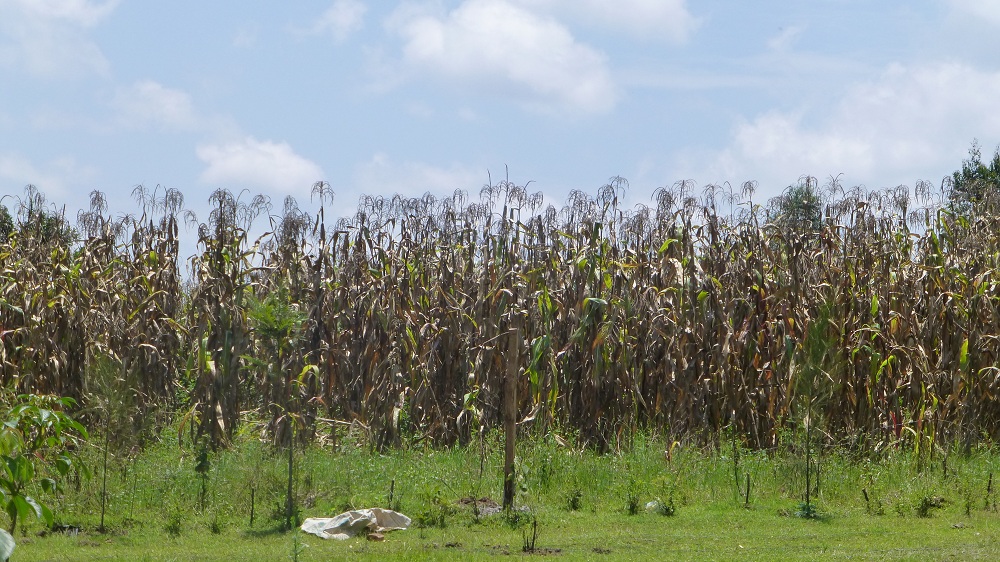
Maize Drying a large part of the Kenyan Diet .
Maize is grown on many of the farms around shisasari and seems to be mainly cultivated by hand.
The building starting to take some form.
The Kenyan Diet
Meals here have been great and Lunch, Dinner usually consists of a combination of Maize, Cabbage,Beans,Meat ,Lentils , Peas and Corn. Corn features regularly in the diet and is grown on many farms in the area.
Sugar
Consumers are limited to purchasing 4 bags of Sugar each. This is to prevent the Rich from buying up all the Sugar and selling it back to the poor at inflated prices,which would further increase the gap between rich and poor.
Kakamega - This is a Town with a population of 80,000 People approx 8km from Shisasari. The third largest in Kenya.After Lunch we travel into town. Approaching Kakamega there is a huge market with People everywhere.Many vendors selling all sorts of goods from small stores. The main shopping centre has a large range of products.Entry requires you to be scanned with an electronic wand before entry. The ATM Machines are kept safe by a Guard with an AK47.
Typical Stalls at the Market in Kakamega
The day finishes on the work site with a couple of rows of bricks completed around each wall. We see the very first signs of a building taking form.
Dinner tonight is at the Golf Hotel in Kakamega. We all have to be scanned before we can enter the Hotel.
The vehicle is checked with a Mirror for IUD Devices,but the Guard does not seem to be paying a lot of attention to the Mirror.
Dinner tonight was Pasta and chips with Drinks. The total cost comes to 250 shillings each. This is the equivalent of about $3.00 AUD in Australia this would be approx $20.00
Maize Drying a large part of the Kenyan Diet .
Maize is grown on many of the farms around shisasari and seems to be mainly cultivated by hand.
The building starting to take some form.
Thursday, September 13, 2012
Day 3 September 11 First Day of Project
Today we start the Project. The building of the High School. We get a sleep in this morning to 08.30. This is because it took us 9 Hours to travel from Masai Mari Wildlife Park to Shisasari ( 280km).
We are being accommodated at Anthony's Home.
This is not a typical home. Most homes are a much more simple structure. Most People do not have running water or Electricity, but might possess a mobile Phone . Anthony's Home has one water tap, which does not always function. Water is primarily transported by bucket.
The Mens Quarters. There is 13 of us sleeping in here,so is a little cramped,but ok. The locals clean the Room every day and sweep out the floor. This is how they show hospitality to us. The first night we are served a hearty meal of beef, Maize (which looks like mashed Potato) and Lentils.
This is the site shed where the Bricks are stored. There are 15000 bricks required for the Project. The site is about 50 Metres from Anthony's Home. The site shed is about 50 Metres from the actual building site. This means forming a human chain to move the bricks to the building site. This would probably take us 2 weeks to do,but Anthony has organized extra Labor for this task.
The Human Chain used to Transport over 10,000 bricks from the shed to the site approx 30 Metres
Day 1 is spent moving bricks to the site in order to have enough to start the construction. The Machine that makes the bricks does not produce a standard size brick. The length will vary depending on the moisture content of the soil. Length varies from 170mm - 270mm.
The local People have laid the first Row of Bricks. These have been concreted in. All the other rows will simply sit brick upon brick using a track,which interlocks the Bricks. The stability relies upon the weight of the brick and correct placement. Bricks are sorted into stacks according to length and then placed in the appropriate part of the wall. The challenge is to find the correct length brick to complete the Gap at the end.
We are being accommodated at Anthony's Home.
This is not a typical home. Most homes are a much more simple structure. Most People do not have running water or Electricity, but might possess a mobile Phone . Anthony's Home has one water tap, which does not always function. Water is primarily transported by bucket.
The Mens Quarters. There is 13 of us sleeping in here,so is a little cramped,but ok. The locals clean the Room every day and sweep out the floor. This is how they show hospitality to us. The first night we are served a hearty meal of beef, Maize (which looks like mashed Potato) and Lentils.
This is the site shed where the Bricks are stored. There are 15000 bricks required for the Project. The site is about 50 Metres from Anthony's Home. The site shed is about 50 Metres from the actual building site. This means forming a human chain to move the bricks to the building site. This would probably take us 2 weeks to do,but Anthony has organized extra Labor for this task.
The Human Chain used to Transport over 10,000 bricks from the shed to the site approx 30 Metres
Day 1 is spent moving bricks to the site in order to have enough to start the construction. The Machine that makes the bricks does not produce a standard size brick. The length will vary depending on the moisture content of the soil. Length varies from 170mm - 270mm.
The local People have laid the first Row of Bricks. These have been concreted in. All the other rows will simply sit brick upon brick using a track,which interlocks the Bricks. The stability relies upon the weight of the brick and correct placement. Bricks are sorted into stacks according to length and then placed in the appropriate part of the wall. The challenge is to find the correct length brick to complete the Gap at the end.
Day 2 September 10 Safari and Shisasari
This morning we are on Safari. Then we head to Shisasari to start the Project. This is going to be a long day.
We see Lions , Hiena's , Buffalo and Cheetah .
Our Tent at the Enklong Camp Site Near Masai Mara Wildlife Park. Complete with Onsuite ( of sorts).
These Cheetah's were sitting in the Grass and very hard to see,but then they moved and sat up,so that we got a good view. We were so fortunate to see Cheetah as they are not seen often. Now our Epic Journey to Shisasari begins. We have hired 4 wheel drive landcrusers to replace the bus for the first leg of the Journey. This is because the dirt roads are so rough. We change back to the bus when we meet the main sealed road.
We see Lions , Hiena's , Buffalo and Cheetah .
Our Tent at the Enklong Camp Site Near Masai Mara Wildlife Park. Complete with Onsuite ( of sorts).
These Cheetah's were sitting in the Grass and very hard to see,but then they moved and sat up,so that we got a good view. We were so fortunate to see Cheetah as they are not seen often. Now our Epic Journey to Shisasari begins. We have hired 4 wheel drive landcrusers to replace the bus for the first leg of the Journey. This is because the dirt roads are so rough. We change back to the bus when we meet the main sealed road.
Wednesday, September 12, 2012
Day 1 September 9 Kenya Safari
As Day 1 and there has been a change in our Itinerary. We are now doing the Day / Half Day Safari at the start,rather than the end of the trip. This is simply because it will be more efficient to do it this way.Leaving Nairobi there are people everywhere walking. This seems to be the major mode of transport. I see more churches per Kilometer than anywhere i have been.
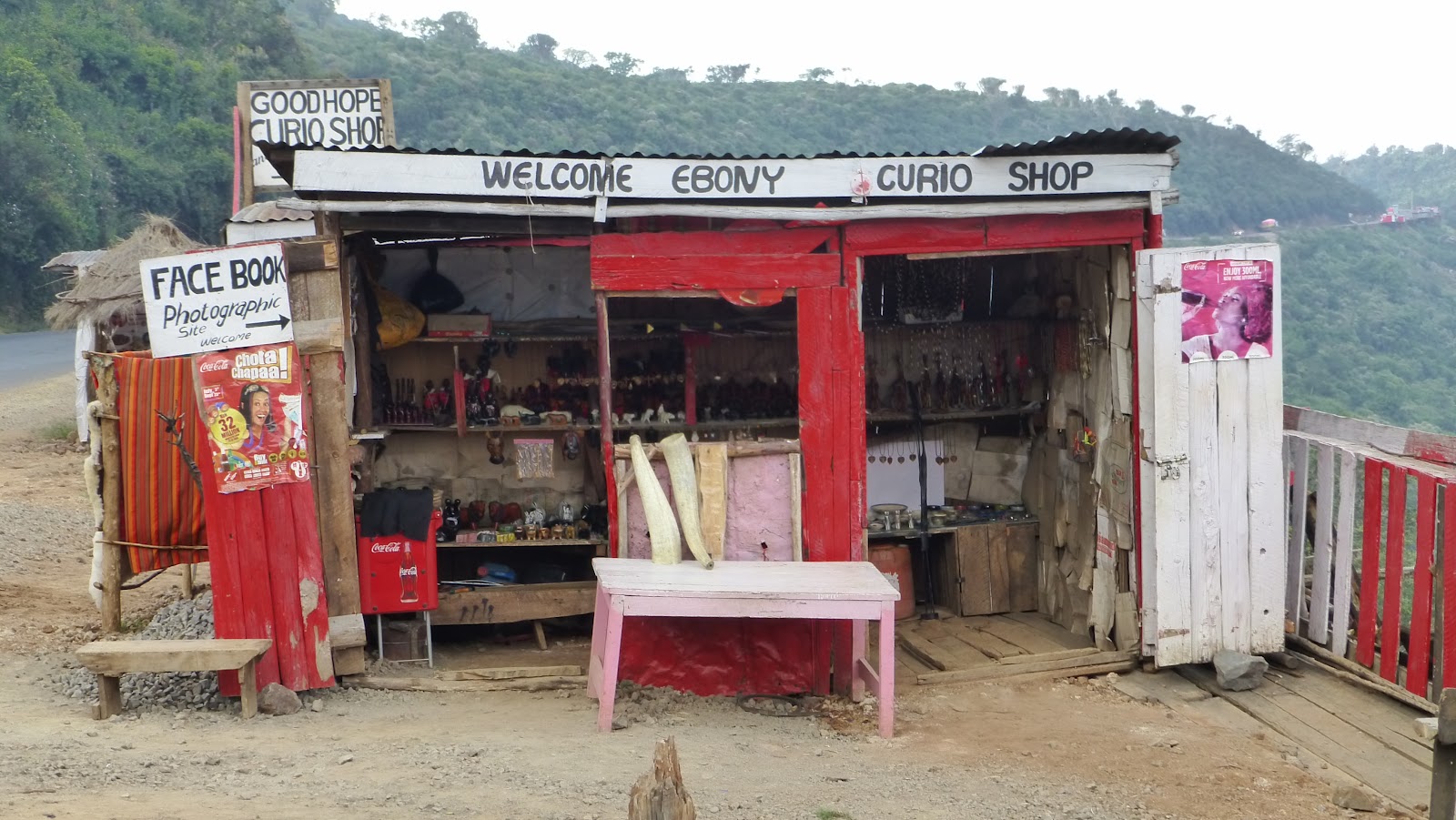
This is typical of one of the Vendors you see on the side of the road selling wood carvings and trinkets. This is in the Rift Valley 60km out of Nairobi. We take almost 10 Hours to travel to Masai Sara Wildlife Park,which is only about 280 Km from Nairobi. Kenya's roads are rough to say the least and even major highways have large pot holes. We will camp here tonight and go on Sasfari in the Morning.
Masi Warrior that we met on the Side of the Road. I Paid good Money for this photo,but have learnt my lesson. Anthony from Operation Orphans International has advised us that we should not pay anything to take photos.
This is typical of one of the Vendors you see on the side of the road selling wood carvings and trinkets. This is in the Rift Valley 60km out of Nairobi. We take almost 10 Hours to travel to Masai Sara Wildlife Park,which is only about 280 Km from Nairobi. Kenya's roads are rough to say the least and even major highways have large pot holes. We will camp here tonight and go on Sasfari in the Morning.
![]() |
| Girraffe on Route to Masai Mari Wildlife Park |
Saturday, September 8, 2012
Touch Down Kenya
The Team for 2012 at Dubai Airport 8th September
First Night at Hampton House in Nairobi, close to the Centre of Town.
Friday, September 7, 2012
5 Hours to lift Off
It is almost surreal to know that in less than an hour i will be heading for the Airport for a 2.40am (Saturday Morning ) flight to Nairobi. Thanks again to all those that have given so generously to make this project possible. Over $50,000 has now been raised towards the project.
Subscribe to:
Posts (Atom)